Have a Question? (866) 332-7881
Back to store

Tuesday, August 3, 2021

3 Best Water Softeners for Your RV


Is there any better feeling than when you’re driving your RV on the open road and the wind is whipping and whistling through the open windows and onto your face? It’s a moment entangled with freedom, leisure, and unadulterated bliss. The road and even the world is yours. However, you will need to take plenty of breaks during your blissful road trip in order to explore, sleep, eat, and use the facilities, whether they be in the RV or not. Therefore, it’s imperative that you are prepared for each one of these occasions.

You will need to be prepared for anything on your road trip. Having updated and functioning appliances in your RV is an important step in your preparation. That’s where we come in at RVupgrades. We understand your love for RV life, but also understand your necessity for safety and comfort when inside your RV. We are here to supply you with all the necessary equipment and other objects you need for flawless and hitchless road traveling.

One aspect of your RV you need to constantly be wary of is your water. Having a water softener is something every RV should have within it. This is because it can extend the life of appliances, prevent rust stains and hard water, improve the taste and color of your water, and improve your skin health. Why wouldn’t you want that in your RV?

You should know the best water softeners for your RV so you can be one big step closer to finding the right one for you. Here are the best three water softeners for your RV so you can get yours faster, then hit the open road sooner.

1.  FlowPur M7002 RV Pro

This is one of our most popular water softeners to date and it’s no wonder as to why. The FlowPur M7002 RV Pro Water Softener is easy to install, as its included head fitting makes the process quick and painless, so you can get to enjoy its benefits sooner rather than later. It has a 10,000-grain capacity and has a high flow rate of four gallons per minute (GPM) without affecting the water pressure. It’s also at a comfortable weight size of 26 pounds, while its overall size is also convenient at 20½ inches in height and eight and ½ inches in diameter.

Its regeneration time is another impressive aspect. It is already regenerated when you first install it, which makes for one alleviated concern. When it does need to be regenerated, it will only take twenty minutes and requires either potassium chloride or table salt. There is also a convenient instruction manual with clear-cut instructions on how to successfully accomplish this. The warranty on the tank is also an astounding five years, while the head is for one. You really cannot go wrong with equipping your RV’s kitchen and bathroom with this water softener.

2.  On The Go OTG4-DBLSOFT Double Standard Portable Water Softener

The On The Go OTG4-DBLSOFT Double Standard Portable Water Softener is an excellent option for affordability, function, and dependability. It provides soft water to your RV for 10-32 days and can be used with any RV. Its 16,000-grain capacity allows for superb filtering and softens 500-1600 gallons before regeneration is necessary. When regeneration is indeed necessary, it usually only takes around 30 minutes to complete. One of the greatest aspects of this water softener is that it requires salt, but it isn't too picky on what kind you use for regeneration. It could be potassium chloride or table salt.

Its GPM is impressive, too, at an impressive 4.5, making the pressure strong enough to shower, wash your hands, and wash dishes effortlessly and potentially joyfully. It's also one of the most convenient sizes for these products. It weighs 32 pounds and is 22 inches by 9.5 inches. Your RV, its water, and even you will certainly be happy with this water softener.

3.  On The Go OTG4-StdSoft Portable Standard RV Water Softener

On The Go strikes again with yet another sensational water softener to better your RV and its water. If you are looking for practicality with proper function, then this is the softener for you and your RV. Carrying will be simple with this one, as it has an easy-to-carry handle at the top and weighs 24 pounds full, but only 18 pounds empty. It’s also 22 inches in height and 6 ¾ inches in diameter, making for an excellent and easy fit for any RV. The design of this softener focuses heavily on being compact and lightweight. Therefore, whether you’re installing it or simply moving it elsewhere in your RV, it’ll be easy to both carry and move. This softener takes your efforts and energy seriously, but also your drinking and cleaning.

The positives don’t end there. It has a spectacular lifespan of 7-10 years, so you won’t need to worry about it for a long while. This fine softener takes either potassium chloride or table salt during regeneration, and the regeneration process only takes 15 minutes. Through each regeneration, you will be provided soft water for 20 days, but specifically 320 to 800 gallons of it. You really cannot go wrong with this softener, as it is one of the best water softeners for your RV.

Purchasing add-ons and other exciting appliances for your RV can be an exciting experience, but it can also be daunting because there are just so many options available to you. However, you should take the water within it seriously because you use it on your body and in it through cooking and drinking. Therefore, adding any one of the above best water softeners for your RV is good practice. Whichever one you decide to choose, you can take comfort in knowing that your RV and its water are in good hands so you can focus more on that relaxing and freeing drive and less on your water.

Tuesday, July 20, 2021

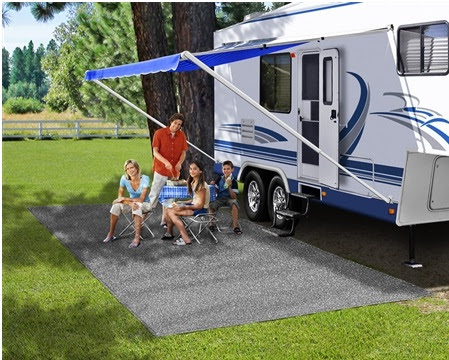
How to Shop for an RV Patio Mat


Think of your RV as a home that you can take out into the brush. Think of it as a sort of a luxury home, if you will, by virtue of the fact that it can go where other homes can’t. Your RV will enable you to travel the country and see sights and scenes that no other home can, all the while keeping you comfortable.

You’d do everything you can to keep your traveling home in top shape, and as clean as possible, wouldn’t you? Even if that meant investing in something as simple as a plain RV patio mat? If you agree, then you’ll be happy to know that even a little detail like the use of an outdoor rug or RV patio mat can go a long way towards keeping the interior of your RV clean. 

Do You Really Need an RV Patio Mat? 

First off, to address the big question here, no, you do not absolutely need an RV patio mat. You can hit the road and go camping without one and you won’t be the worse for wear. However, dropping a patio rug under your outdoor areas will benefit your RV in a surprising number of ways.

RV patio mats are highly versatile, easy to care for, and stylish, and when you add one to your outdoor arrangement, you’ll have plenty of reasons to be glad that you did. They’re great at keeping your outdoor spaces as well as your indoor spaces clean, but they’re valuable for many other reasons than that. 

How an RV Patio Mat Can Help? 

The prime reason that area rugs designed specifically for RV patios are valuable is that they help keep dirt from being tracked through the interior of your RV. Many of them are created from durable, stain resistant materials and will allow dirt, dust and sand to filter through one way, while simultaneously not allowing it to travel back up through the weave. This helps shed dirt and prevents the interior of your RV from becoming dirty.

Many RV patio mats are also made from durable materials like PVC and polyester that are abrasion and wear resistant and UV protected as well, to prevent them from breaking down under the influence of sunlight. Some of them are easy to clean, and what’s better is that many of them are reversible and can be flipped over, ending the need for daily cleanings.

Many of these rugs, which are ideal for high traffic and outdoor seating areas, like an RV patio, are made in a delightful range of colors and patterns to suit any setting. With a wisely chosen rug, the purchase can be as much about form as it is about function.

Things to Look for 

If you’re willing to front the money for a new patio mat, here are some top traits to look for in your search. They’ll help ensure you get the most value out of your investment. 

-       Pick a reversible model

Many outdoor patio mats are reversible, which gives you a few distinct benefits. One is that you may be able to get two designs for the price of one. The other is that you don’t need to clean them as frequently, especially if you just want to shake them out to release dirt. Simply flip it over!

-       Tough materials are worth the price

Many patio mats are made with tough materials like polyester and PVC which are resistant to a whole range of adverse environmental factors and weather conditions. The tougher the better, the longer they will last. People do step all over mats, after all.

-       Choose one that is easy to clean

Although many patio mats are reversible, you’ll have to clean them eventually, especially before you roll or fold them for storage. Most of them can be easily cleaned with a hose and soap and water, and air dried.

-       Look for reinforced grommets and hemmed edges

People do tend to beat up but indoor and outdoor rugs, since they are made to be walked on. Reinforced grommets will help to prevent eyelets from tearing at the point at which you secure your rug, and hemmed edges will help stave off fraying and premature wear.

-       Look for UV, mold and mildew resistance

Many patio mats are made from UV-resistant synthetic materials, which helps prevent them from breaking down prematurely. Others are also resistant to mold and mildew, which is a big bonus, considering these mats spend a lot of time laying on the (potentially) wet ground.

-       Resistance to stains and fading

Finally, get a rug that is resistant to stains and fading, since inevitably you’re going to spill something on it at least once over the course of its lifetime!

Get Yours Here!

Call us if you have any questions about our collection of RV patio mats and we’d be glad to help. You can reach us at 866-332-7881 or by the live chat feature on our website - whatever’s easiest for you!

Friday, July 16, 2021

RV Leveling Jacks: Not the Same as Stabilizing Jacks


Owning an RV is sort of like owning a smaller home on wheels. It is a mobile home, after all, and with it comes no shortage of responsibilities. You almost need to get a secondary education on best practices and things to look out for in order to pay the proper level of care to your second home.

Don’t store your awning wet, or it will develop mold and mildew. Don’t leave it unfurled, either. Make sure you use a surge protector to shield your appliances and your electrical infrastructure from dangers associated with power dips, spikes and surges. Use a water softener in order to protect your fixtures and your plumbing from a variety of ills associated with hard water. The list goes on.

You can add to it the need to learn the differences between RV leveling jacks and stabilizing jacks. These two classes of RV accessories or equipment are not the same and cannot be used for the same purposes, in spite of their superficial similarities.

Additionally, there are circumstances in which an RV might only need to be stabilized and not leveled, and then there are separate circumstances in which the RV might need to be both stabilized and leveled. It all depends on what equipment comes with your RV, where you are camped and parked, and what issues you are experiencing.

Use this short guide to learn more about the differences between leveling and stabilization, the different types of equipment used to accomplish both tasks, and why and when they are necessary.

If you still have questions at the end of it, feel free to give us a call to learn more about how we can help. 

Leveling an RV


Sometimes, leveling an RV doesn’t even come to mind, mostly because it simply isn’t necessary. If your RV is parked at a paved campsite on a level surface, or at home in your driveway or in the yard, then you might not even have to give it a second thought.

However, if you are staying for an extended period of time in a campsite that is graded or otherwise off level, then there’s quite a different story. The thing is, RVs are larger, heavier and more complex than smaller vehicles, and they are not designed to stay situated for prolonged periods of time on grades. Like a house, they’re built to withstand stresses only when they are oriented properly. You can only imagine what would happen otherwise!

Whatever the circumstances that cause it, if you’re going to be camping for a while or leaving your RV in a location where it is off level, then you need to either use the RV’s own leveling system or invest in a set of RV leveling jacks or leveling blocks if the situation calls for it.

This is where it is important to note the distinction between RV leveling jacks and RV stabilizing jacks. In case you didn’t notice, RVs are large, unwieldy, and heavy. You can’t simply use any piece of equipment to level an RV. Stabilizing jacks, for their part, are not intended to carry the weight of an RV - only to stabilize it. Leveling jacks, like hydraulic jacks, or leveling blocks or wheel chocks, are expressly designed to be able to support more of the weight of an RV.

If your RV comes with a leveling system to help bring it back to grade, then you can simply use that to level the RV. If it doesn’t, then you’ll have to use a set of leveling jacks or blocks.

Why Level? 

At this point, RV owners might be wondering why they need to level their RV in the first place. You might think that the RV is fine as it is, on or off a grade, but the reality is that that is not the case. If you do happen to keep your RV on a slanted surface, you’ll need to level it for several reasons, not the least of which include some of the following.

1.    Leveling helps minimize stress on the frame, structure and interior components.

Your RV is designed to stay upright and level. Whenever you let it rest off level, you’re placing an immense amount of pressure and stress on all of the components within the RV, as well as its overall structure. Over time, this will damage the RV.

Also, allowing the RV to rest off-level will also mean that there’s more stress on doors, cabinets and appliances within the RV. It can also cause things to shift within the cupboards or the fridge, or to fall over and break, even if they are otherwise stored properly.

Speaking of the fridge, that is an entirely separate issue that can arise when your RV is not resting on a level surface.

2.    Leveling helps protect the operation of your RV absorption fridge.

Another reason that you need to keep your RV level, and one of the best of them, is if your RV uses an absorption refrigerator. These fridges rely on a flow of water and ammonia in order to remove energy from the environment and keep the interior cool.

The problem is that they are only intended to be operated while level. If they are operated when they are not level, the liquids within them will pool in the wrong areas, resulting in the appliance overheating. The best-case scenario is that the fridge suffers damage and stops working, but if it really overheats, it has the potential to start a fire.

Not sure if your RV has an absorption fridge? Play it safe, keep the RV level. Our first reason should have been justification enough for that.

3.    Leveling increases your comfort while you’re in the RV

This should be self-evident. If everything is on a minor grade while you’re camping, it’s going to decrease your comfort. Not only will it make it hard to pour a glass of water and set it down on a level surface (because where would that be?) but it will also make it harder to relax and sleep.

4.    It will help you take more accurate readings

If you’re looking to get accurate readings from your water tank or fuel tank while your RV is in camp, you had better do so when the RV is level. If it isn’t you might as well kiss your wish for accurate readings goodbye. You might think you’re running out of water when really you have half a tank left - or the opposite, which isn’t much better. In short, keep your RV level by using the proper tools.

All of these reasons are legitimate reasons that you should take leveling your RV seriously and do it right the first time. It’s sad to think that the least compelling reason among them has to do with comfort because you can actually cause real, irreversible material damage to your RV or fridge by failing to level it. 

Tips for Leveling 

Now that you’re ready to level your RV and set on doing it right the first time, the most important thing we can tell you is to make sure you’re using the right equipment. Notably, you cannot use stabilizing jacks to level an RV. It is dangerous even to attempt it, so don’t.

If you’re not using an RV’s built-in system, make sure you’re using RV leveling jacks that are appropriately rated for the load you intend to place on them. You might also want to consider getting a set of jack pads so that the jack’s bases don’t sink into soft ground. If they do, you’ll be dealing with a potentially dangerous situation. It’ll also make it extremely difficult to get the jacks out again, and worst of all, it’ll put you back off-level.

If you use chocks or wheel blocks, make sure that the blocks are at least the full width of the tire. If you use chocks or blocks that are too narrow, you may cause irreparable damage to the tires and need to replace them.

Additionally, whether with jacks or chocks, it’s a good practice to always keep at least one tire grounded. You should use the minimum that you need to level the RV and keep one tire on the ground. Think about it; you’re creating extra work if you can’t get the RV level and leave one tire on the ground.

Whether you end up using electric jacks or manually, crank-powered jacks, be sure you only use equipment that’s qualified for the job, and for the finishing touch, keep a few levels on hand. You can actually use them when you’re finished to check and see if your RV is actually level or not. 

Stabilizing an RV 

In essence, you keep an RV level in order to prevent damage to its frame and appliances and to ensure that you are more comfortable during your stay in camp. You stabilize an RV for slightly different reasons.

Sometimes RVs, or travel trailers, will rock back and forth or side to side as you move through them, once they are set up in camp. Typically, this is not associated with an off-level setting, but with the commotion within. To rectify this situation, you can use RV stabilizing jacks.

To clarify, RV stabilizing jacks or other stabilizers do not level an RV. They cannot be safely used to bring an off-level RV back to level, and can only be safely and practically used to prevent an RV from rocking or swaying.

Even with that said, there are plenty of good reasons why you might want to stabilize your RV. Back and forth motion within an RV may not cause the same issues as failing to level it, but it will compromise your comfort while in camp.


Why Stabilize? 

If you’ve experienced trouble in camp with your RV or travel trailer swaying unduly, then you might want to consider stabilizing it using the proper stabilizing jacks. The chief reason that people stabilize their RVs or trailers is to prevent bouncing or swaying, as these can be considered relatively uncomfortable.

If your trailer or RV comes with stabilizing jacks built-in (some do) you can simply deploy these. Otherwise, you can consult our collection of RV stabilizing jacks here at RV Upgrades and pick a set. Just make sure that they are properly rated for the job and that you have the tools and equipment necessary to use them.

As with RV leveling jacks, it’s a good idea to get a heavy-duty jack pad for use with your stabilizing jacks. They won’t be subject to quite as much force and pressure as leveling jacks, but nonetheless, there will be a lot of weight on them. Using jack pads as necessary will help prevent a problem removing or adjusting the jacks down the line. 

Get the Essentials Here! 

Here at RV Upgrades, we have not only RV leveling jacks, chocks, blocks and jack pads but also RV stabilizing jacks and all of the associated equipment you could possibly need for either task. It’s no trouble at all to stay comfortable in camp with a little help from our supply and expertise.

On that note, if you have any questions at all about the difference between leveling and stabilizing jacks, when you can or should use one over the other, how to use them, or what differences exist between them, please feel free to get in touch with us.

You can contact us by phone at 866-332-7881 with any questions you have, but you can also reach out to us via the live chat function on our website if you find that more expedient or convenient. Let us know how we can help and we will be glad to - and remember, all standard ground orders over $99 get free shipping!

Before you go, make sure you connect with us on our social media accounts, Twitter, Facebook and Pinterest. Stay up to date on current events, news and developments so you’re the first to know when we get new products!

Tuesday, June 22, 2021

Don’t Forget These Things If You Plan on Relaxing Outside of Your RV This Summer


Owning an RV can be a very rewarding experience. Of course, when people think of RVs their first thought is the thrill of living on the road. They think of the homely appliances and conveniences that come with an RV that you wouldn’t have in the average car or van. The first thing that new RV owners think about is how they’re going to decorate the inside of their cabin and what gadgets and utilities they will be bringing on the road. One thought that constantly gets overlooked is the outside of the RV.

The truth is, even if you have everything you need to live your life inside of your vehicle, you’ll still be spending time outside of it. Whether you’re at a campsite on a long trip or you’re around the corner from your house and tailgating a local sports game, there are simple ways to improve the outer decor of your RV and make your time a little more pleasant. The first things you should be investing in are an RV awning and an RV awning mat.

RV Awning

An awning for your RV is absolutely essential if you plan on spending any time outside of your RV whatsoever. The number one reason is simply to brace the weather. If it’s an extremely hot day, then why would you face the heat if you don’t have to. You have your RV, you might as well utilize it. An awning can give you shade from the heat and cool you off. The same thing applies to a rainy day. Standing under a sturdy RV awning will keep you from getting soaked when the weather is bad.

With canopy extensions, you can have even more friends and family under the awning to enjoy the shade. There are plenty of other accessories and add-ons to make your time even that more enjoyable. One example would be an RV sun shade. These shades hang off the side of your canopy and block up to 85% of light and reduce glare tremendously. This way you’ll be protected from the sun regardless of which angle it’s hitting you.

RV Awning Mat

If you’re spending time relaxing outside of your RV under your awning on a hot day, you could sit there and think “what could be better than this”. Well, no awning is complete without an RV awning mat. Once you have one you will never want to go back. These mats are perfect for almost any occasion. Personalize any campsite or tailgate and make yourself comfortable.

These outdoor RV mats come in various different colors including a red, white, and blue variant that would be perfect for that Fourth of July weekend. You can pick out the perfect one that matches what you like or that matches the particular occasion. The best of these mats are completely mold and mildew resistant. This makes them easy to clean and nice to look at when laid down beside your RV.

Whether you need a patio mat or a camping rug, having something to put down outside of your RV under the awning is crucial to the coziness of the RV. The main point of having an RV is to feel like you’re home while you’re on the road. You won’t be able to have that home away from your home if you aren’t able to step out into your “front yard” and relax.

RV Awning Accessories

Once you have your awning and awning rug, the other things you might need are RV awning accessories. At RV Upgrades we have a vast selection of accessories available. These are items you might not need initially, but if your awning faces any damage or ever loses an important part, we have the replacement available for you.

If you are using your awning frequently it can get dirty fairly quickly. We have the proper cleaning supplies for your RV awning. We have clips, bolts, hooks, safety straps and more are all available in one convenient location. Any awning supplies you need for your RV can be found right here.

RV Upgrades is your number one spot for all of your RV needs. Regardless of what you’re looking for, we have it right here on our website. Whether you are looking for something to decorate your RV, something to keep your items sturdy and in place, or something related to the actual function of the RV like small bolts, nuts, and bearings, we have all of that right here. Get an RV awning, RV awning mat, and RV awning accessories right here. Feel free to browse the site and if you have any questions reach out and we’ll do whatever we can to help you out.

Thursday, June 3, 2021

A Useful Comparison of Some On The Go Water Softeners


RV owners have their work cut out for them. As enjoyable as recreational vehicles can make on the road living and camping, there are so many special tools and gadgets that it’s worth your while to carry because of the unforeseen pitfalls of RV life. There’s also a lot you need to be aware of. For example, never leave your RV awning open and unattended or store it wet, and take care to cover your RV tires to protect them from long-term damage attributable to UV light exposure.

These are just two very small, very specific instances in which RV owners need to be uncommonly attentive to the details of RV living and RV care. Here’s another one, that has real consequences for RV owners - the quality of the water that you run through your pipes.

Here is an unfortunate truth about the quality of water in the United States. We may have a lot of it, and it may be freely available, but in most areas of the country, the water sources will be hard. This is something you need to be aware of as an RV owner - and something against which you need to take action, for the better of your RV.

Hard and Soft Water 

It’s been said that over 80% of the homes in the United States have hard water, which would then allow it to follow that a majority of RVs are exposed to the same. Just what is hard water, though?

Hard water is water that contains a high concentration of dissolved minerals. The two chief minerals that most hard water contains are magnesium and calcium, although water can be considered hard if it contains traces of other minerals as well.

The thing about hard water is that there is nothing categorically wrong with it. You can drink hard water, use it for cleaning and cooking, and much more. The problem arises when you use hard water for a prolonged time.

Some of these issues are specific to RV owners and others of them are general nuisances. For example, hard water can make dishes and glasses more brittle and prone to chipping and breaking over time. It can also leave white or yellowish marks or stains on dishes and silverware - but more on that in a moment.

Hard water is also a nuisance for homeowners because hard water ruins laundry over time. A few wash cycles and you won’t notice much of anything, but after repeated exposure to hard water, the colors of clothing will fade. Your clothes, towels and other textiles will fade and wear out long before their time when exposed to hard water.

Soft water, by comparison, is water that does not contain the same concentrations of dissolved minerals, chiefly magnesium and calcium. Soft water is beneficial for a bunch of reasons, namely because it does not leave marks on dishes and appliances, and is not damaging to clothing and other textiles. Soft water also increases the efficacy of soap and detergents and is better for your skin and hair.

Is My Water Hard?

If you want to know for sure whether your water is hard or soft, you can always get a test kit with test strips to know for sure. This will tell you about pH readings as well as what dissolved minerals are present in the water and in what concentrations. However, in many instances, a testing kit is not even necessary to determine if water is hard or soft. Sometimes, hard water will present itself with some of the following telltale signs.

If your water is soft, you have little to worry about and probably will not notice anything amiss. However, if your RV is chronically exposed to hard water, you may notice spotting, staining, or streaking in your dishwater, on or around your pipes, or on your appliances. Sometimes this discoloration appears white and cloudy, other times it appears yellow or even almost brown. You might also notice this type of discoloration on your dishes, glassware, or silverware.

Another telltale sign is that your clothing, towels, or other garments appear washed out, dull, or feel prematurely worn out or rough. Of course, this is not a dead giveaway - it might also mean you should be using a different detergent - but it is a sign of hard water.

Another sign that you’re experiencing hard water is if your skin and hair feel “off” after showering. This could be due to the residue left on your skin by hard water, but it could also be because hard water limits the efficiency of soap and leaves soap on your skin or hair as well.

Finally, one of the big giveaways is diminished water pressure, which can indicate that you’re not only using hard water but that it is actively causing damage to your RV’s plumbing system. If you notice diminished water pressure from your faucets or showerhead, along with unsightly stains or spotting, you’re almost certainly laboring under hard water and need to do something about it. This is because of the scale deposits left behind in your pipes by the hard water. 

What Is Scale? 

Hard water scale is, simply put, the deposits of magnesium, calcium, and other minerals that are left behind by hard water as it passes through pipes or comes into contact with a surface. The spots and stains left on dishes and glassware are a form of scale, which, though unsightly, is not necessarily a material issue.

Hard water scale can become a serious problem when it is left unchecked and allowed to accumulate within pipes and appliances. This is because, some of the time, these deposits are accumulating unbeknownst to the other of the RV and can damage your plumbing system over time.

When too much hard water scale accumulates within the pipes in an RV, or the lines of an appliance, the first thing that will happen is that it will diminish the performance of that appliance. This is where you may notice that a faucet or showerhead is providing a more sluggish flow than usual.

If this occurs, it means that the scale within the pipes has accumulated to the point that it is adversely affecting the flow of water through them. This is a problem for several reasons. For one, it will impact the use of your plumbing. For another, it places an immense strain and terrible pressure on the pipes and fittings. This can result in burst pipes, damaged appliances, and more. These are expensive to remedy in their own right, but if a pipe bursts and floods your RV, you’ll be looking at an entirely different issue altogether.

Luckily, you can remedy the issue of hard water with a simple system like an On The Go Water Softener 

How a Water Softener Can Help 

A water softener can help you preserve the life of your RV’s plumbing system as well as your appliances while providing a wide range of other useful benefits as well. Generally speaking, a water softening system will work to remove some of the dissolved minerals from your water before it makes its way through your pipes and into your appliances. This way, a water softener can help with some of the following problems:

-       No more spotting or staining on dishes, silverware, glassware, or crystal

-       No more washed out or faded laundry

-       Soap and shampoo will work better, so your skin and hair will feel much better

-       No more staining of appliances which will adversely affect their value

-       Most importantly - no more scale buildup in pipes which can damage your plumbing system and appliances

Here at RV Upgrades, we offer quite a range of solutions in water softeners, including several options in On The Go Water Softeners which will work hard to remove dissolved trace minerals from your water before you use it. 

Some Options in On The Go Water Softeners 

If you’re looking for an On The Go Water Softener to prevent some of the issues named in this article, consider some of the following: 

On The Go Portable Standard RV Water Softener (OTG4-StdSoft) 


The On The Go Portable Standard RV Water Softener is a highly practical solution for most RV owners that are plagued with hard water. It not only solves a whole host of problems caused by hard water, but it is also easy to fit, easy to use, and easy to recharge.

This portable water softener removes magnesium and calcium from your water before you use it. Its design features an easy-carry handle and a wide mouth to make it easier to recharge - it’s also lightweight and easy to hook up.

This On The Go Water Softener does not require any tools or electricity to operate and can be hooked up to your RV effortlessly. It takes nothing more than a standard hose connection between the park faucet and your RV’s inlet hose.

The unit itself contains 8,000 grains and can soften anywhere between 320 and 800 gallons before it needs to be recharged, lasting up to 20 days on a single charge. It utilized potassium chloride and can be recharged with common table salt to continue softening water.

It’s small and lightweight, which means it can be installed even in tight spaces and stored out of the way if it is not needed, both traits that are highly valuable on RVs where space comes at a premium.

This portable water softening system comes with an inlet cap, an outlet cap, a handle, an inlet hi-flow shutoff valve, inlet, and outlet hose adapters, a backflush adapter, test strips, and a high-pressure 4-foot white drinking hose.

On The Go Double Standard RV Water Softener (OTG4-DBLSOFT) 

If the capacity of the previous Portable On The Go Water Softener is not adequate for your needs, then you might be interested in the On The Go Double Standard RV Water Softener. This On The Go Water Softener can last anywhere from 10 to 32 days - that’s a month - before it needs to be regenerated.

This water softening system features 16,000 grains per unit of softening, and works great to soften your RV’s water supply, thereby reducing damage to your plumbing and your appliances.

Like the previous On The Go Water Softener, this water softening system can be easily installed. It requires no tools for installation and no electricity for operation and can be easily regenerated with normal table salt within as little as 30 minutes.

Throughout one charge, it can soften anywhere from 500 to 1,600 gallons before it will need to be regenerated, depending on the level of hardness. This portable RV water softener also offers an excellent water flow rate of around 4.5 gallons per minute. It’s a little larger, bulkier, and heavier than the former unit, but it is still compact and lightweight, perfect for taking on the road.

This water softener also comes with a 1-year manufacturer warranty, as well as storage inlet and outlet caps, along with a handle, an inlet hi-flow shutoff valve, inlet and outlet hose adapters, a backflush adapter, and a 4-foot high-pressure white drinking hose.

Questions? Contact Us! 

Whatever your questions are, the team here at RV Upgrades is here to help you. We’ll put your concerns about hard water to rest, whether you’re looking for a test kit to determine whether or not you have hard water or you need an actual water softening system to solve the issue.

Additionally, if you need some help picking out a water softening system, we are here to help. Contact us via your preferred method and let us know what you’re looking for and we’ll help you choose the right water softener. You can reach us by phone at 866-332-7881, but you can also reach us via the live chat feature that you can use right here on our website, whichever is easier for you. Soft water is within reach - you just need the right water softening system for your RV!

Tuesday, May 18, 2021

Why a Quality RV Dehumidifier is Worth Investing In


An air conditioner, a microwave, and a mini-fridge are some of the more common appliances that come into play when talking about how to make an RV more livable, but there’s another appliance that you may want to consider if you really want your RV or camper to be as cozy as possible.

An RV dehumidifier will help reduce the stuffiness of the cabin and ultimately help to make your RV experience more enjoyable, especially on long excursions or when you have to spend extended periods of time inside the RV.

If you have been thinking about adding one of these appliances to your RV and aren’t exactly sure about their effectiveness or the benefits that are involved with using them, this quick guide will help to answer your questions.

Making Your RV Comfortable

Whether you’re an outdoorsy type or prefer the creature comforts of your camper, everyone can agree that it’s important to make sure that your RV is as comfortable as possible. One of the joys of owning an RV is the ability to take the comforts of home with you on the road so that you can feel more relaxed and less stressed no matter where you are.

There’s a lot that goes into making an RV feel comfortable, however. There are many appliances and features of a typical home that we tend to take for granted and not even think about, but that you may need to consider for your RV if you truly want it to provide you with the kind of comfort you are looking for.

For instance, a microwave is the perfect example of a go-to appliance that you may at first think you won’t need on the road, but which is all but essential if you want a quick and easy way to heat up your food. These days, microwaves are such a common part of everyday life it’s easy to forget about them, yet they could make or break a fun trip in your RV.

This is just one example of the different comforts we are accustomed to at home that you may want to consider applying to your RV. The use of an RV dehumidifier is another prime example.

While these appliances aren’t always a necessity in a modern home that is well ventilated, being able to control the humidity within the smaller space of an RV cabin is an absolute must if you want to maximize your comfort.

What Does a Dehumidifier Really Do?

You may be wondering what do these appliances actually do and will you feel their benefit? The fact that many of us forgo using dehumidifiers in our own homes may make you wary about investing in one for your RV.

The truth is that the smaller and often less ventilated space of an RV doesn’t lend itself to a comfortable level of humidity. Between the steam created when you get a hot shower or boil water on the stove, to the hot and humid conditions outside of your RV, moisture is bound to build up inside the RV itself. With an increase in moisture comes the tell-tale signs of high humidity, including clamminess and air that’s oppressive and hard to feel comfortable in.

Anyone who has tried to sleep in a hot and humid environment knows how much of a nuisance moisture in the air can be. An RV dehumidifier essentially sucks the moisture out of the air continuously, helping to regulate the air and simply make your RV far more comfortable and livable.

Even if you have a high-quality air conditioning unit for your RV, this isn’t necessarily a replacement for a dehumidifier. Cool clammy air can be similarly uncomfortable.

It’s also important to regulate the humidity inside of your RV because of health reasons. Moisture in the air encourages mold buildup and also contributes to bacterial growth. It’s far easier to keep the inside of your RV fresh, clean, and comfy when the air is less humid.

Shopping For a Reliable RV Dehumidifier

Now that you know how beneficial these appliances are for the overall comfort levels of your RV, it makes sense that you would want to invest in one. Here at RVupgrades, we specialize in providing top-quality RV supplies, including appliances and electronics, so you are already in the right place.

As you browse through our extensive selection of RV products, you will notice that we have everything you need in order to make your camper nice and comfortable. From powerful AC units to high-quality dehumidifiers for RVs, heaters, covers, and a wide variety of other essentials.

If you own an RV, make sure it provides you with quality comfort. Get what you need here in our online RV store or contact us for more details on the products we offer.

Wednesday, May 5, 2021

What You Need to Know About Surge Protectors for RVs


Keeping up with the needs of your RV can be a lot like owning a home. A smaller, more mobile home - which is why RVs are sometimes considered by similar terms. Among other things, you need to be well-informed about best practices in towing and towing safety, how and when to use a water softener system (and why), all about RV awning care, the differences between RV leveling jacks and stabilizing jacks, and so much more.

When and where should you use RV roof tape? What happens to some RV fridges when the RV isn’t leveled? How can you prevent damage to your appliances, both electrical and those that deliver water?

These are just some of the questions you need to be able to answer readily as an RV owner. Keeping well-researched and informed on these matters will enable you to more effectively deal with problems on the road and possibly even prevent them.

One of the chief electrical considerations you will have to make for your RV is how to prevent damage to your electrical appliances attributable to power surges. To do this, you need not only a surge protector for your RV, but also need a basic understanding of shore power connections, what a power surge is, and why you need protection in the first place.

Starting Out: What is Shore Power?

Your RV has a battery and an alternator which enables the rig to generate electrical power from some of the energy released from the fuel that the engine burns. However, when you’re in camp or elsewhere that affords the convenience of a connection to an external power source, there’s no reason to put that type of strain on your battery. When you’re living in your RV, powering lights and appliances places a great strain on your battery that you can avoid with the use of shore power.

Shore power is basically any power supply that provides electricity from an external source to an RV, enabling you to utilize electricity when you’re in camp or at an RV park. Shore power could theoretically come from a house, but many RV campsites actually offer shore power hookups.

Depending on the size and specifications of your RV, you’ll probably have either 30 or 50 amp service, as these are typical ratings for RVs, whereas many homes have between 100 and 200 amp service. RVs can understandably get away with lower ratings because they are smaller than homes and do not have such a pressing need for power.

This makes it important for you to select a shore power cord that is rated accordingly. Choosing a power cord that is not properly rated can be dangerous, and you should never utilize a shore power cord that does not meet the minimum requirements (that is, do not ever use a 30 amp power cord to draw 50 amps as it can overheat, start a fire or otherwise damage your electrical systems). A good rule of thumb is to follow the ratings precisely.

Connecting to shore power is highly convenient because it frees you from the need to draw from your RV battery (unless you have a generator in which case that might be a moot point). However, once you’re hooked up to an external power source, you need to be very wary of a specific threat to your RV’s electrical system that is more common than many would like to admit: power surges.

Starting Out: What is an Electrical Surge?

Electrical supply is measured primarily according to two metrics, voltage, and current. Current is a measurement of how much electricity is flowing through a circuit for a given unit of time. Voltage is slightly more complex and is treated as the product of current multiplied by resistance. Resistance is a measurement of how much the circuit “pushes back” on the flow of electricity and therefore voltage is a large indicator of how much (for lack of a better term) electricity a circuit can handle safely. This is why appliances and electrical cables have voltage ratings.

Most shore connections are rated to 120 volts, and for that reason, many appliances are rated for 120 volt systems. Appliances are only rated to work properly (or safely) through a very narrow range of voltage ratings. Any change in the voltage rating, either up or down, can damage the appliance, result in a fire, or otherwise post a hazard to health and safety.

A power surge occurs whenever the supply of electricity to your RV spikes, and there are many different factors that can cause this. A power surge can be caused by a malfunction in a nearby transformer that regulates and controls the local voltage or it could be caused by utility companies manipulating the power supply on the grid, which can cause surges and dips in voltage. Power surges can also be the result of natural causes, such as lightning strikes or even interference with a power line, such as a tree limb coming in contact with it.


A surge can actually even be caused by usage inside of the RV. If you have appliances within the RV that draw a lot of power, if they are suddenly shut on or off, they can disrupt or divert the flow of electricity to other components on the system, which can be very damaging. Usually, these surges are comparatively small, but over time they can wear down your other electrical components.

Because many of the most powerful (and therefore the most damaging surges) are the result of unpredictable natural events, it is not practical to avoid them. You must secure protection against them because of the damage they can cause.

Similar to a power surge is a power dip, which is the opposite situation, in which the voltage periodically drops. Although it might make sense to assume that there are no risks associated with power dips, this is not the case. Dips in power, like surges, can be just as negatively impactful for the appliances in your RV.

The Problem with Power Surges

When you exceed the voltage capacity of an electrical appliance, such as what would happen during a power surge, you create a very negative set of circumstances for that appliance. Worse is the fact that power surges occur in the blink of an eye, so they are not something that can be predicted and avoided.

When there is a power surge and unprotected electrical appliances bear the brunt of that surge, the voltage increase inside the appliance can cause an arc across components. The extra energy from the arc is spent as heat which can be extremely damaging to electronics. For example, some electronics are controlled or managed via internal circuit boards that direct and control the flow of energy. When these overheat, they can “burn out,” which in a sense destroys them and renders the associated appliance inoperable.

Even if a surge doesn’t immediately incapacitate a device, over time, smaller surges to unprotected devices can slowly wear out and degrade their components. An electrical device like a TV that has been exposed to too many “small” power surges will eventually wear out and cease to function ahead of its time. Sometimes you can’t see the immediate damage caused by a surge, but overtime surges will shorten the length of electronics’ lifespans.

While smaller surges can damage, destroy or otherwise shorten the usable lifespans of electronics and other electrical appliances, extremely powerful surges can actually be much more destructive. Particularly powerful surges can even start fires, making surges not only a threat to your RV’s electrical infrastructure but also to the safety of you and your loved ones.

In order to protect against these adverse effects, a surge protector for an RV, or an EMS (electrical management system) provides even better, additional protection.

How Do Surge Protectors for RVs Work?

The most basic surge protectors for RVs are themselves fairly simple electrical appliances that serve a few simple functions. The basic and central function of a surge protector for your RV is to serve as an interrupting force to divert or limit extra voltage in the event of a power surge or a spike (which is like a surge but does not last as long)

Surge protectors don’t all operate by exactly the same principle, to take a high-level approach to the protection they offer, they typically divert the excess voltage away from your RV. if the surge protector detects a spike or a surge in voltage, it will shunt the excess electrical potential away from your RV so that your appliances and electrical system do not suffer the damage.

Surge protectors for RVs are not the only way to provide your RV with electrical protection against power spikes and surges. A more comprehensive solution would be an electrical management system, or EMS, which does basically everything a surge protector does and provides additional protection when you connect your RV to an external power source.

An EMS, which will cost you more than a surge protector for your RV, and will provide you additional protection, against both high and low voltages. While the damage that can be caused by high voltage is apparent, the damage that can be caused by low voltage is not as apparent, and low voltage issues are more common than you might expect.

Whenever there is a strong demand on a local power supply, the voltage supplied to your RV can dip, causing your appliances to run on a lower voltage than they should. If this happens and you continuously run your appliances on a lower voltage, they will eventually fail, just as they would with prolonged exposure to spikes.

A surge protector for your RV or even an EMS might seem like a significant investment, but it’s well worth the protection if you ever experience a serious surge that knocks out your electrical system. Consider the cost of wiring issues, rewiring, or even the cost of a new air conditioner or fridge!

What Features to Look for in Surge Protectors for RVs

Now that you know a little more about power surges and why you need to afford protection to your RV, here are some features you should consider if you decide to go with a surge protector for your RV to protect against surges and spikes.

-       Accurately measure power pedestal levels - You’re only as accurate as the information at your disposal; your surge protector should indicate the level of power you’re drawing from the pedestal you’re hooked up to.

-       An LED display or indicator - Many surge protectors come with an LED display that will indicate conditions such as “Power On,” “Open Ground,” “No Power” and even power levels.

-       Portability in surge protectors is a bonus - Look for a model that not only provides adequate protection but is also lightweight and easy to install! There are plenty of portable units in our store.

-       Weather-resistant design and thermal protection - If your surge protector is going to be plugged in outside between the shore power connection and your RV, you might as well get a unit that is resistant to high temperatures as well as the weather - it’ll last longer.

-       High response time - Some surge protectors will kick in and provide protection in as little as five nanoseconds.

-       High and low voltage protection - Many surge protectors do not protect against low voltage, but some do, increasing their utility and overall value.

-       Automatic restart features - Some surge protectors automatically restore power once the surge has ended.

-       Look for a model that delivers alerts - Many surge protectors are compatible with apps like Power Watchdog that can deliver you updates via Bluetooth.

-       A high degree of surge protection - Since surges are unpredictable, the higher the protection a surge protector can offer you, the better.


Choosing a surge protector for your RV to help diagnose and prevent electrical issues is not a task that you should take lightly. The right purchase can make a big impact on the prolonged health and operability of your electrical system. It’s important to get a compatible unit that has the features you desire.

If you have any questions about any of our products, including our RV surge protectors, please feel free to reach out to us and we’ll help you make the best choice. You can reach us at 866-332-7881. Let us know more about your RV, what electrical protection it currently features, and we’ll help you pick the best surge protector for your unique situation.